
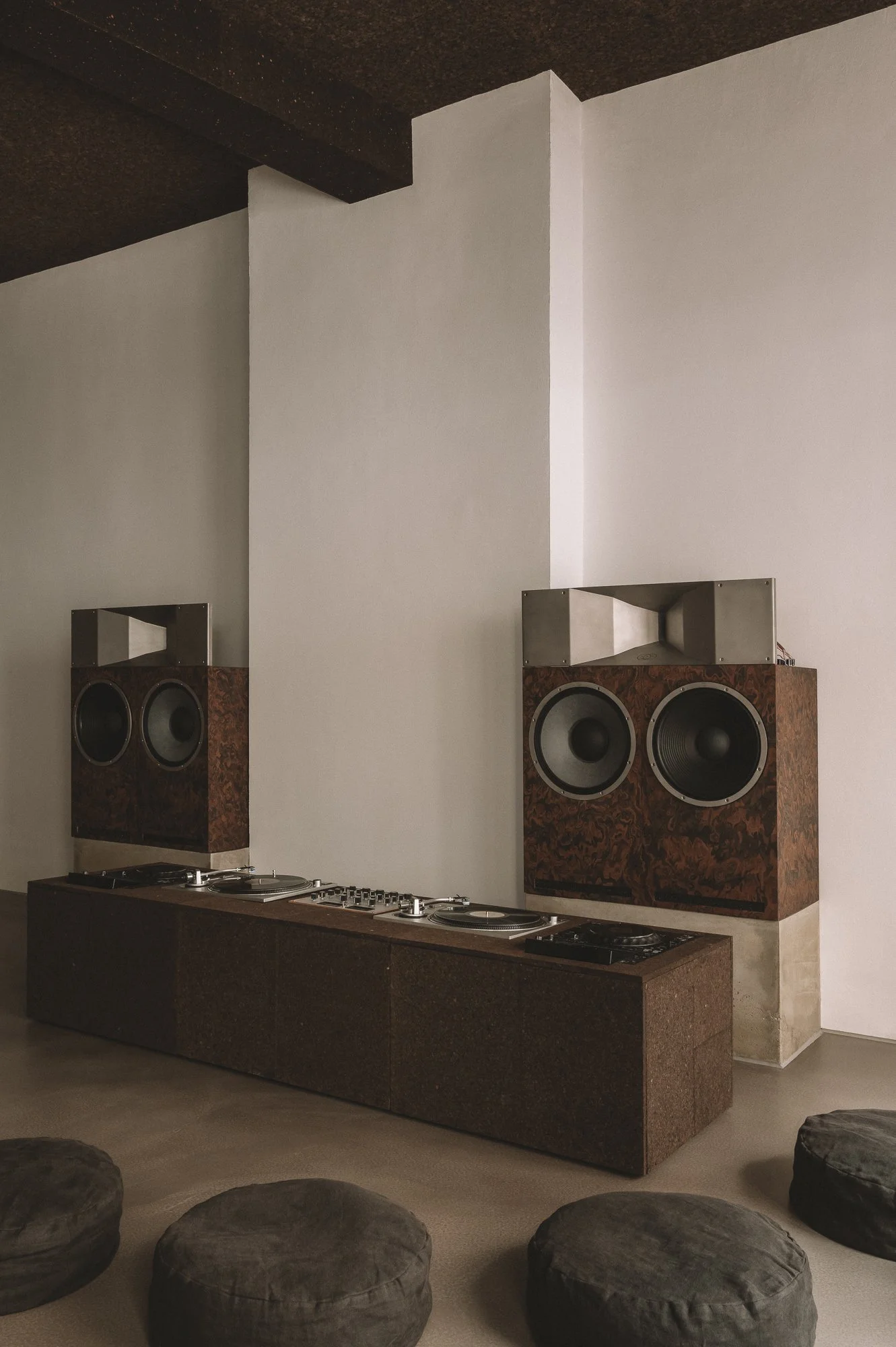
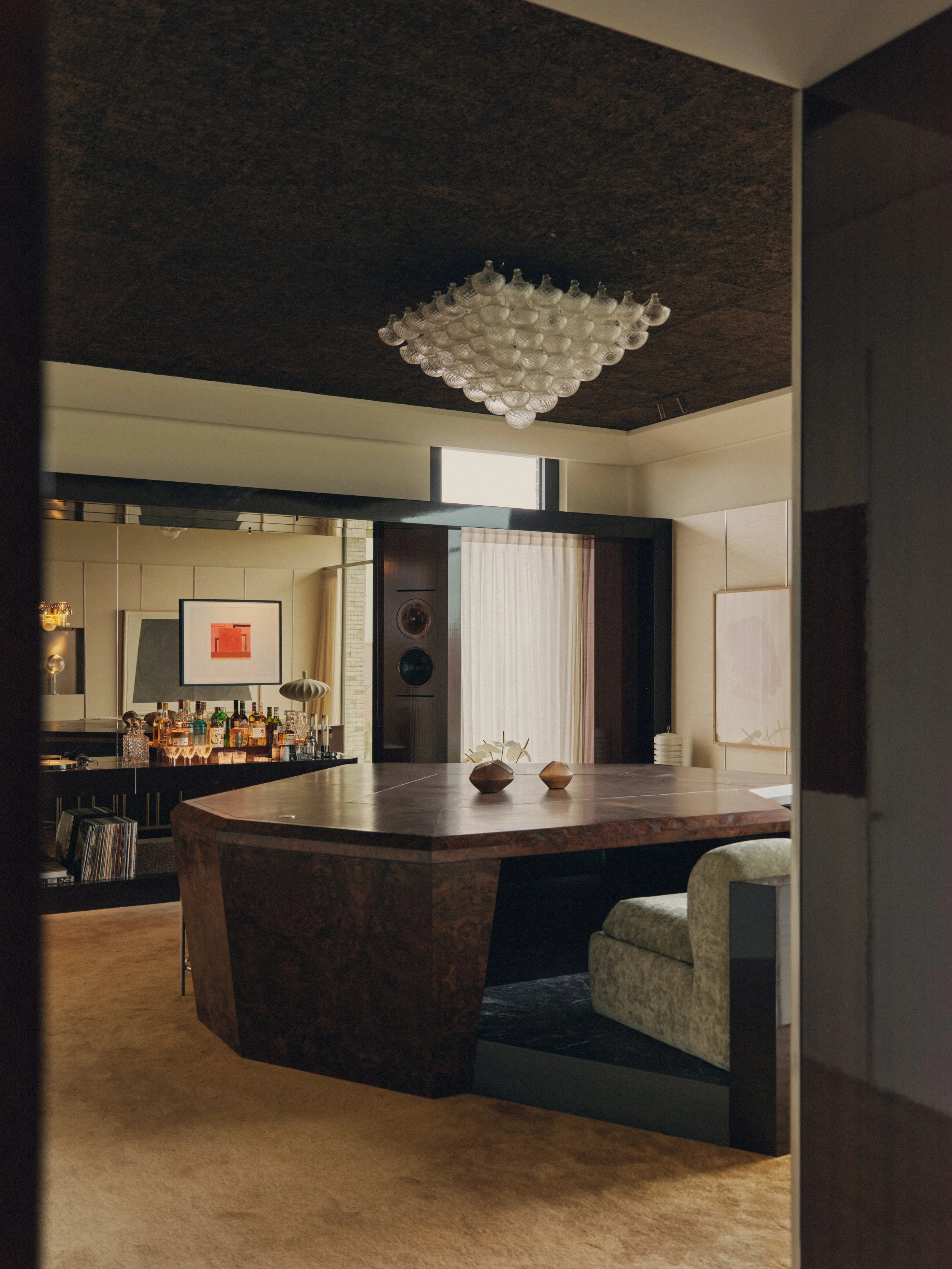
Trader hifi, Hamburg
From cork bark to acoustic architecture
Corkinho works directly with the material, developing custom surfaces for architects, interior designers and brands.
Each project begins with the character of the space: its dimensions, its acoustic requirements, its atmosphere and the way people are expected to experience it.
We then develop the cork accordingly — from colour and density to thickness, texture, geometry and installation.
The result can be a wall, ceiling, column, DJ booth, speaker environment or a complete acoustic landscape.
Rather than adding an acoustic product to an interior, we seek to make the acoustic treatment part of the architecture itself.
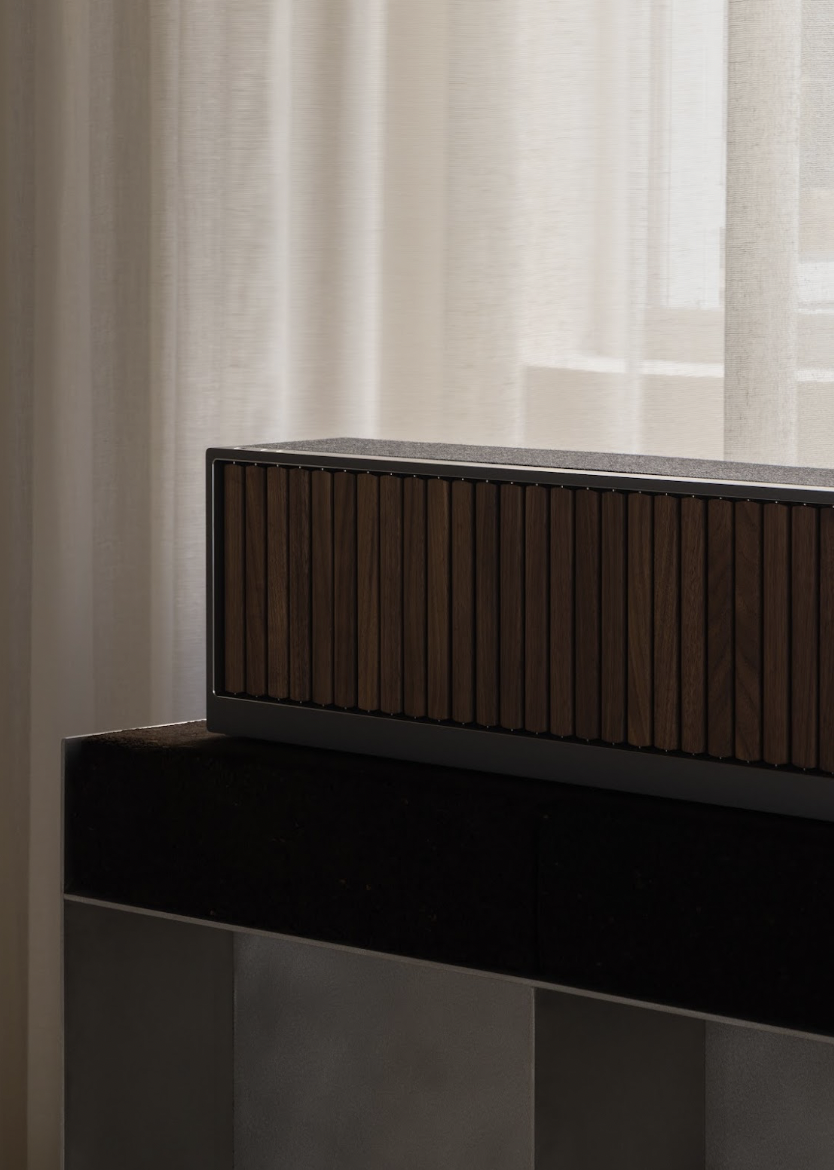
Dynaudio showroom by Norm architects,
Copenhagen
A material already grounded with sound
Our work has found its way into spaces where sound is central to the experience.
At Trader HiFi in Hamburg, cork becomes part of the listening environment through the DJ booth, acoustic ceiling and architectural elements, creating a material language around focused listening.
At élan in Oslo, designed by Snøhetta, cork forms an important part of a sensory interior conceived around coffee, sound and social interaction. The project combines natural cork with a bespoke soundscape, and Snøhetta describes the material as richly textured, acoustic, matte, warm, porous and renewable.
Our collaborations with designers and architects extend across hospitality, interiors and listening environments — including work with Grain Designoffice in Knokke and Dynaudio in Copenhagen in collaboration with NORM Architects.
These projects share a common ambition:
to make sound tactile, to reduce noise
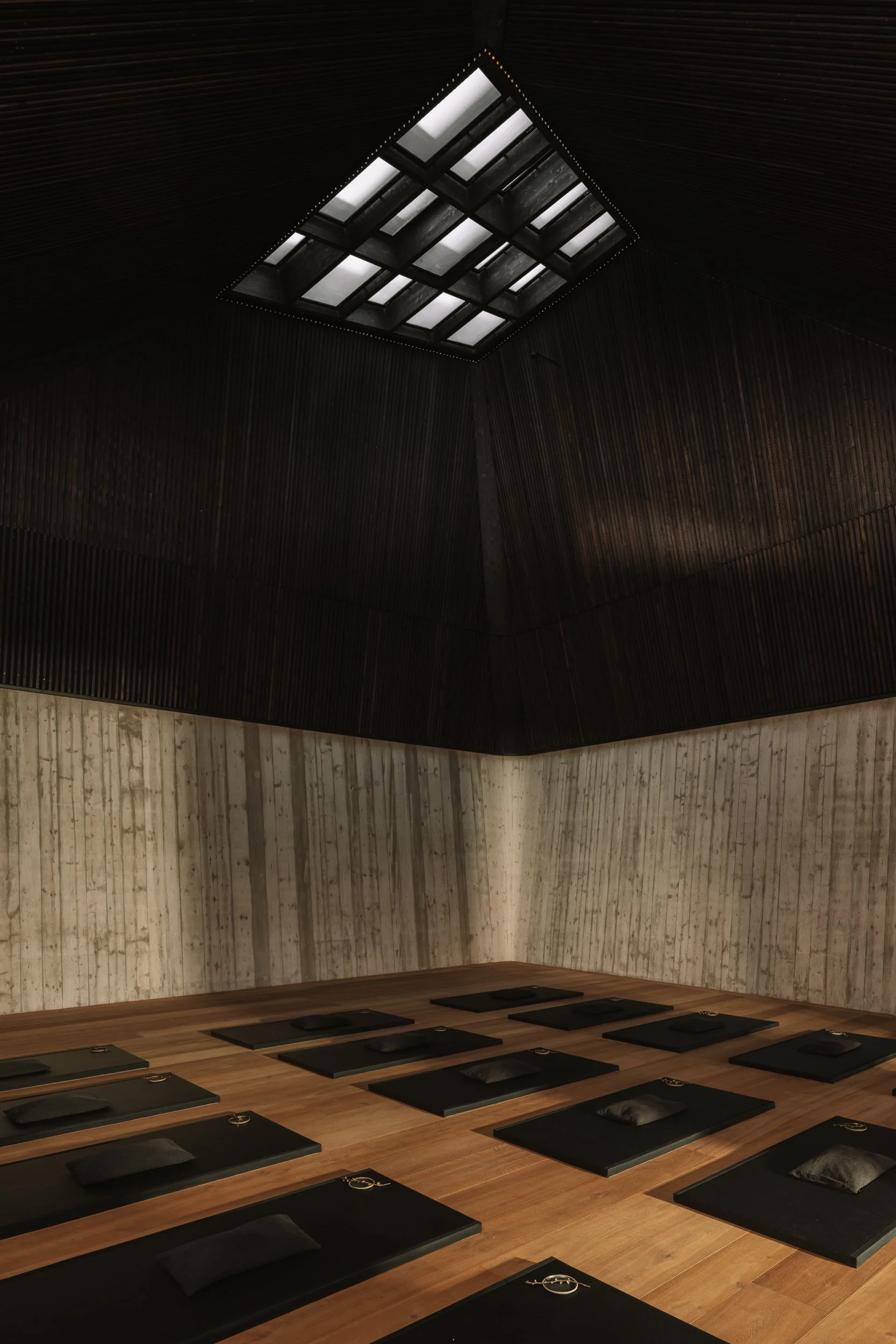
Reethaus by Monika Gogl x Slowness
Better sound. Better atmosphere.
The ambition is to allow music to breathe.
To feel the energy of listening.
To reduce the harshness of unwanted noise.
making conversation more comfortable.
To create space between sounds.
And ultimately, to allow people to become more present to what they are hearing.
Corkinho sees acoustic design as an opportunity to generate a dialogue between sound, material, craftsmanship and atmosphere.
Because when a material can improve the way a room sounds — while also improving the way it feels —
acoustic performance becomes part of the architecture.
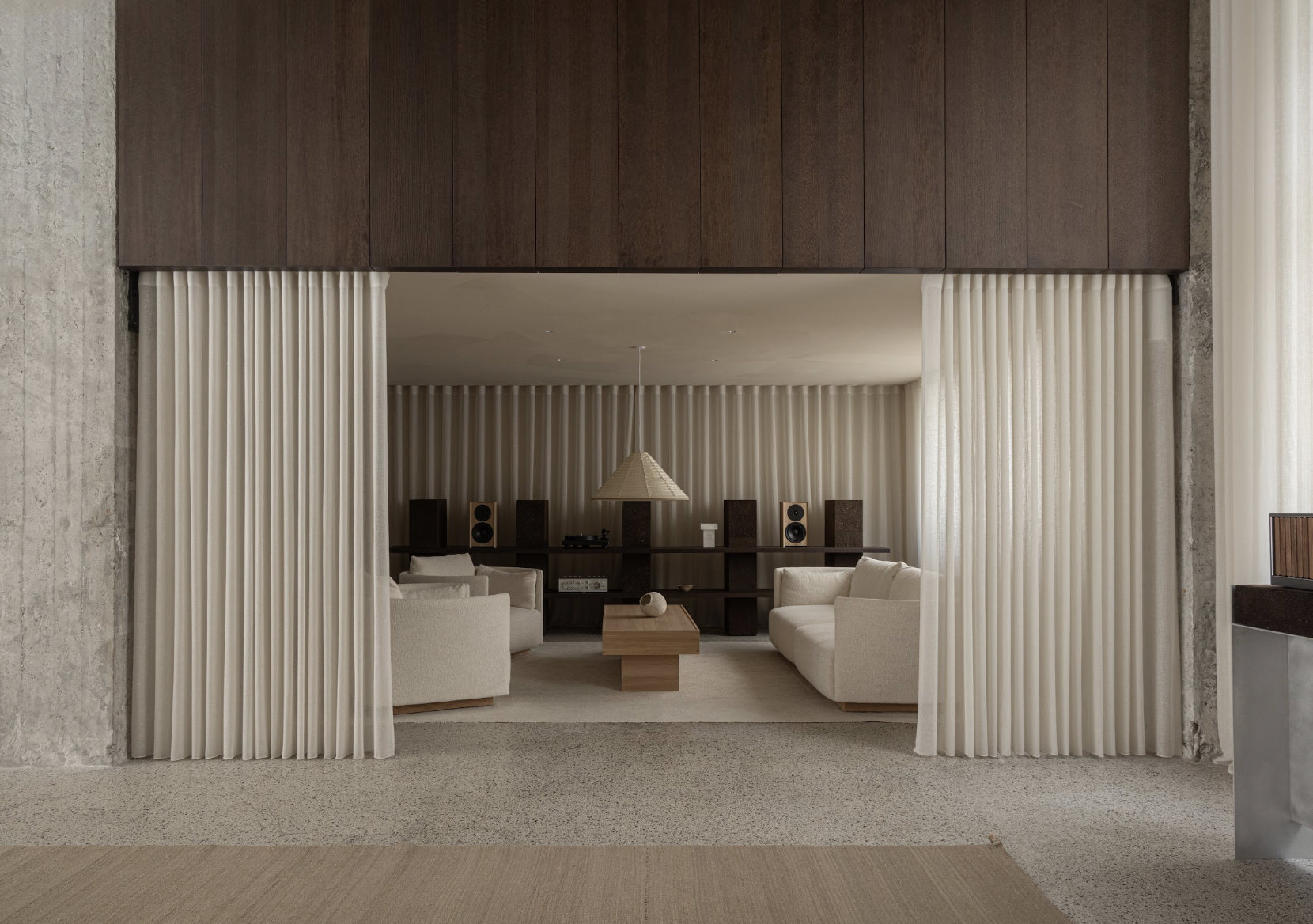
LISTENING ROOMS
Shaping the sound of a space
A listening room is not only about the sound system.
It is about everything that happens in between the speaker and the listener — the reflections, the silence between notes, the atmosphere of the room, the way sound moves through space.
At Corkinho, we believe that the material surrounding the listener is part of the listening experience.
We transform cork into tactile architectural surfaces that help soften reflections, reduce unwanted noise and create a warmer, more balanced acoustic environment — while bringing the natural character of cork into the interior.
A surface designed to listen
Cork has a unique relationship with sound.
Its cellular structure naturally helps dissipate acoustic energy and damp vibrations. But rather than hiding this material behind an acoustic fabric or treating it as a purely technical layer, Corkinho brings cork to the surface.
Our tiles are conceived as acoustic surfaces first, architectural elements second — designed to be seen, touched and experienced.
Through different densities, thicknesses, patterns and finishes, we can shape how the cork interacts with sound.
One of our distinctive processes is sandblasting the cork surface.
By opening and texturing the surface, we increase its micro-porosity and create a more articulated surface for sound to interact with. The result is not simply a decorative finish: the craftsmanship becomes part of the acoustic quality.
The surface becomes tactile.
The texture becomes visible.
And the material itself becomes part of the sound experience.
Dynaudio showroom by Norm architects,
Copenhagen
Designed for the way you listen
Every listening space has a different acoustic frequency.
A private listening room asks for intimacy.
A hi-fi showroom asks for precision.
A “kissa” asks for a balance between conversation, listening and atmosphere.
A hospitality space may need to absorb noise without feeling acoustically dead.
This is where bespoke design becomes important.
Corkinho develops custom-made acoustic surfaces in close dialogue with architects, designers, acoustic specialists and clients — creating solutions that respond simultaneously to performance, materiality and architecture.
From a single tactile wall to hundreds of square metres of bespoke cork tiles, each project is developed around the character of the space.
GRAIN office,
Knokke / Belgium
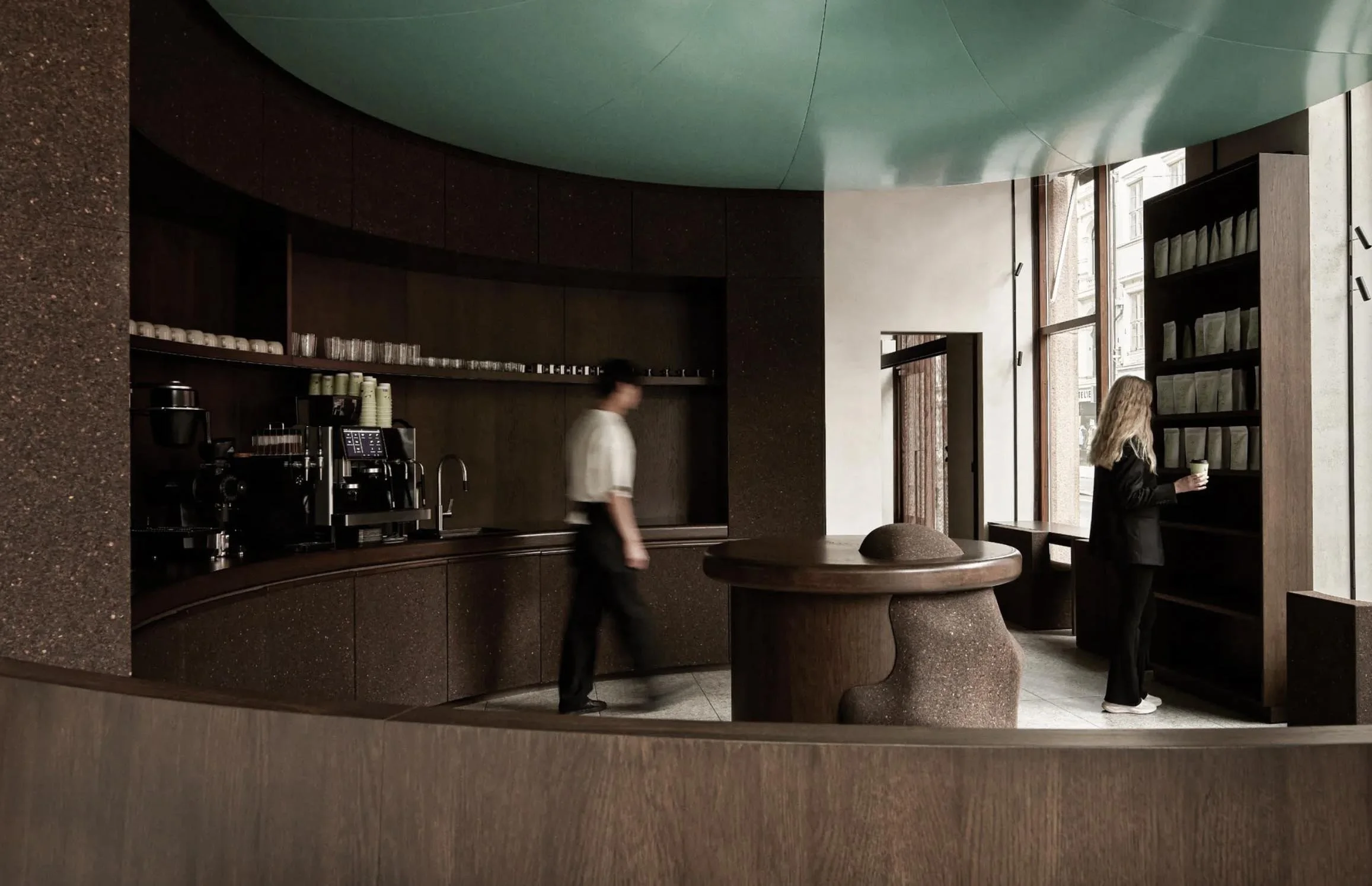
Elan by Snohetta x Magnat